INTERVIEW
"The passion is alive and that’s what drives us. You can’t let that go"
Øya Festival boss Claes Olsen spoke to NME about running one of Europe’s most respected and progressive festivals for 26 years at a time when global politics feel increasingly turbulent.
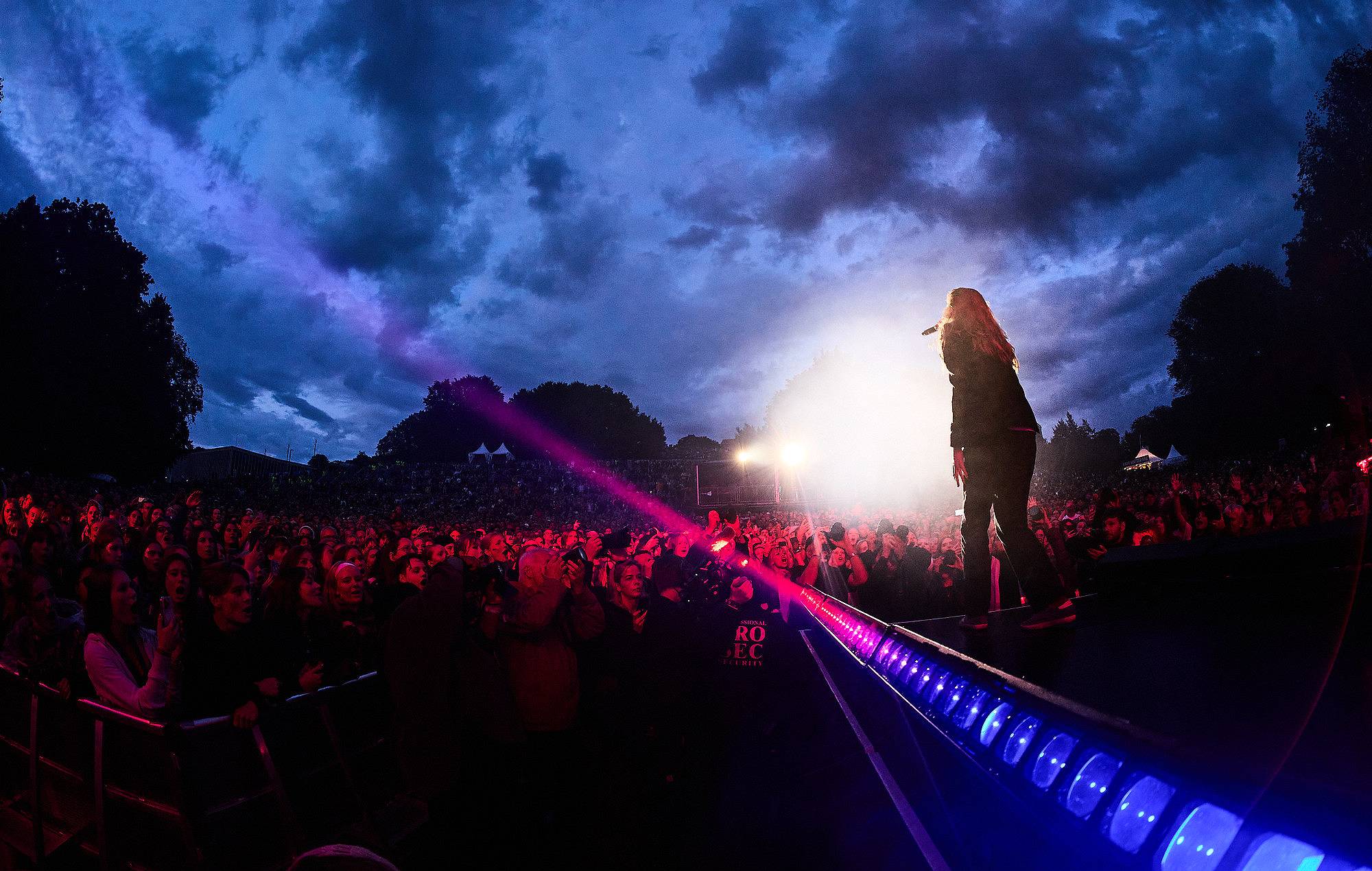
Last week, the Oslo event wrapped up its 26th edition with an impressive roster of headliners. Chappell Roan kicked off her summer 2025 run with a theatrical set, Charli XCX closed out her Brat era in spectacular style, Queens Of The Stone Age finally returned after having to cancel last year, and Girl In Red completed her rise from Øya’s smallest stage to Saturday’s top billing.
Alongside one of the strongest line-ups in Europe this summer, the festival showcased a wide mix of international and Norwegian acts, including Fontaines D.C., Kneecap, Wet Leg, Beth Gibbons, Lola Young, Heartworms, Kelly Lee Owens, Khruangbin, and MK. Gee, Pom Poko, Anna Of The North, and many more.
A core part of Øya’s mission has always been to highlight homegrown talent while presenting some of the world’s biggest names. Every year, they traditionally give the final night’s headline spot to a Norwegian act. Beyond the music, the festival has been a leader in pushing social issues, from quietly delivering a gender-balanced line-up long before most events in Europe, to weaving sustainability into its operations.
 Girl In Red live at Øya 2025. Credit: Øyafestivalen – Helge Brekke
Olsen, who has been involved since Øya began in 1999, explained that the guiding principle has always been straightforward.
“We just wanted to create the kind of festival we’d want to attend ourselves, and to follow our hearts in programming the artists we love,” he told NME. “We’re a team of 10 people in the programming committee, always keeping an eye on new music and trying to stay ahead. We never compromise, and we would never book acts just to do anyone a favor. These are the artists we genuinely want to see.”
He went on: “At first, it was really about supporting the local music scene for the first couple of years. We were all running small venues, and most other festivals in Norway focused on big international acts with just a few Norwegian artists as openers. We wanted to flip that on its head.
“That was the beginning. In 2003 we got very much into sustainability, then over the years that grew for our ethos to be about inclusivity, equality, anti-discrimination and all these other aspects.”
This year also saw protests outside the festival gates, with demonstrators calling for a boycott because of the involvement of KKR, a global investment firm with ties to Israel through several of its holdings. KKR owns Superstruct Entertainment, which in turn runs numerous international festivals, including Field Day, Tramlines, The Mighty Hoopla, Benicàssim, and Sónar.
Øya responded by saying that none of its revenue is connected to “activities that contribute to maintaining Israel’s illegal occupation of Palestine.” Instead, they chose to confront the issue directly. Acts like Kneecap, Fontaines D.C., and Mary Wallopers used their stage time to criticize Israel and voice their support for Palestine.
Kneecap even led the crowd in chanting “fuck KKR” and publicly accused the Norwegian government of “enabling genocide.”
 Kneecap perform live at Øya 2025. CREDIT: Øyafestivalen – Ihnebilder
Check out the full conversation with Olsen below, where he speaks about giving Palestine a platform, celebrating local talent, planning for next year, why people should experience Øya, and his dream list of headliners for the future.
NME: Hello Claes. Øya seems to do things quite quietly. You’d had a gender-split line-up for years when other major events started to amplify that they were starting…
Claes Olsen: “We try not to brag too much about all the things we do – let other people do that! On sustainability, we’ve won a lot of awards and stuff, but we’re not out loud about everything we do. Last year, for instance, we went fully vegetarian at the festival. The plan was to do it without anyone knowing about it up front and just noticing good food, but then there were some local journalists that got hold of it, and then it blew up to be this big thing. We were asked to be on debate programmes on national TV about why we didn’t want to have meat. We thought it was very strange that it would be a controversial thing in 2024.
“We do a lot of charity stuff too, but we keep quiet about it.”
A lot of festivals and big companies make excuses about not doing those kinds of things. How easy is it?
“It’s not easy. Everything becomes more expensive, but I don’t think I’d want to do it if I had to compromise a lot. The passion is there, and that’s our drive to do it. You can’t lose that. Of course, it’s more and more difficult, and then money and politics become involved. It’s not easy.”

Tell us about the protestors outside and your stance on KKR. You’ve basically said that it makes sense to continue with the festival and make it a platform for Palestine?
“Definitely. We feel like a music festival like us should be the perfect platform to have artists and ourselves express values and opinions about a lot of topics – especially on Palestine. We’ve seen a lot of artists do it, and we’ve put a lot of effort into taking a clear stance. That’s important.”
“We’ve got a stand on Palestine and we printed thousands and thousands of bracelets to be sold for good causes in Gaza. There’s a mixture of people behind it. There’s a Norwegian doctor called Mads Gilbert who goes to Gaza twice a month and has been doing so for 25 years. He came to us and said that we needed solidarity and to stand together in this cause instead of being divided. He knows so much more about this topic than we do, and taught us so much. To stand together and help the people in Gaza is so much more important than anything else at the moment.”

Over the last 26 years, how have you found the international audience growing at Øya?
“We’ve never marketed the festival outside of Norway, but still it’s like five to seven per cent of fans coming from abroad – the UK, Germany, Japan. It’s easier now because the Norwegian Krone is so weak; it’s not as expensive as it used to be.”
What would you say to a music fan, awaiting a summer festival season without Glastonbury, about what they’d get from Øya that they can’t get anywhere else?
“We have a very unique festival site of amphitheatres where you can get very close to the stages. You can stay very close by in the city; there are a lot of venues that you can go to afterwards. It’s the whole package.
“People always tell us that there’s more space, it’s easy to get around, and you can get very close to big artists.”

Have you booked any talent for next year?
“Yes, we already have two headliners confirmed.”
Any clues?
“Not now, not yet! It’s really cool to have that. It’s looking very good.”
Could one of those acts be Oasis?
“I don’t think so! I would love to – I went to see them in Manchester – but they’re too big for us.”
Is there anyone on the line-up this year that you’d like to see stepping up to headline in the future?
“I like to see bands grow organically to that. There are a few smaller acts that I think are really, really good. We have a great story with Girl In Red, who played our demo stage in her first year [in 2018] and now she’s headlining; she’s been touring all over the world since. I hope that happens again.”
“People always ask, ‘Who’s the next big thing?’ You never know. In April last year, when we started talking to Charli XCX and Chapell Roan, we weren’t discussing headline slots in the beginning, then things just grew and grew. Sadly for us, they didn’t confirm before they got so big so it got more expensive, but on the other hand they did such a big production and their teams played it well.”
Who are your bucket list dream headliners?
“Me personally? It would be Depeche Mode, but I’m pretty sure we can’t fit in their production.”
Thanks, Claes. Anything to add?
“Come to Øya – it’s not as expensive as you think.”
Øya Festival returns to Toyenpark in Oslo from August 12-15, 2026. Visit here for more information.



.jpg)