REVIEWS
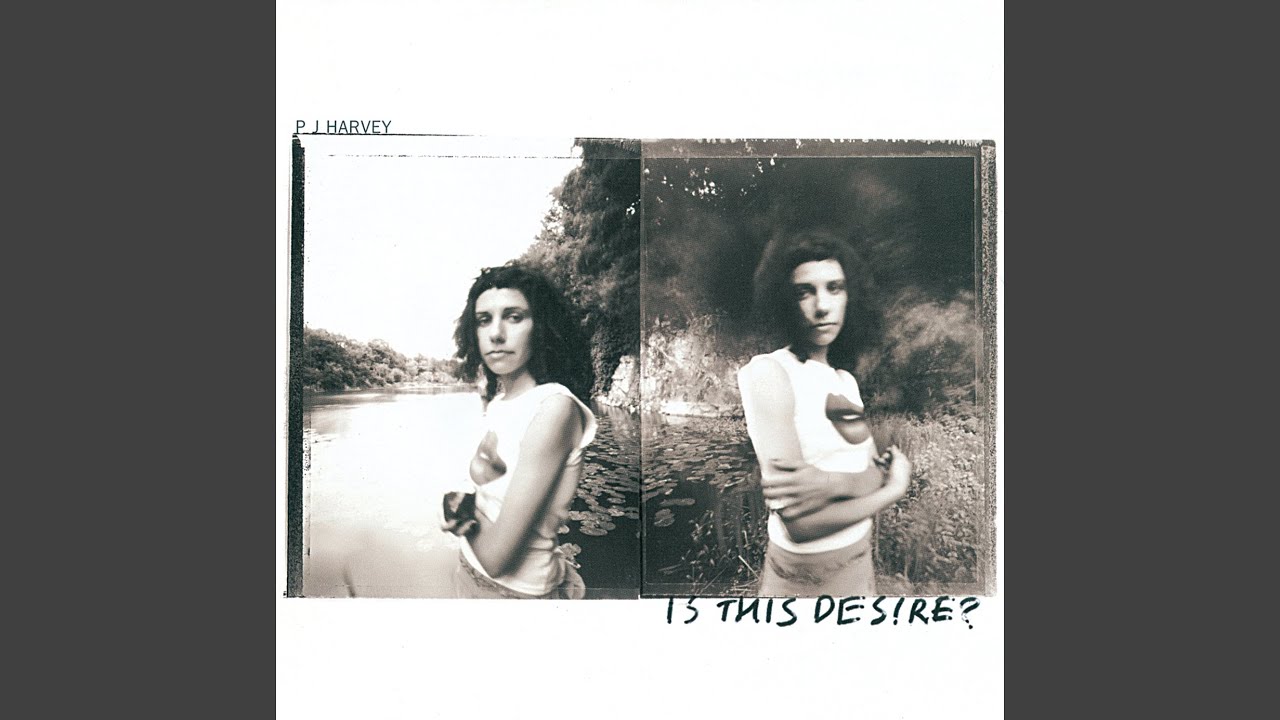
Every Sunday, Pitchfork revisits a landmark album from the past, highlighting works not yet featured in their archives. This week, the focus is on Polly Jean Harvey’s 1998 Southern gothic classic, a raw, striking rock album filled with restrained emotion
A woman lives in a walled garden made of stone, where moss and lichen cling to every surface like the skin and hair of something ancient. Time moves differently here—everything feels old, and even new things seem to age the moment they enter. She can’t leave, and no one can come in. Through the cracks in the wall, she catches glimpses of a figure outside and imagines what life might be like if they were together inside the garden. When the wind passes through those cracks, she mistakes it for the figure’s voice—calling to her in a language she can’t understand. She dreams of knowing this person, though she never will. What she holds onto are the images she builds in her mind, reflections of herself that shimmer and fracture like broken glass.
Each song on PJ Harvey’s Is This Desire? unfolds like a story within this same world—each one turning endlessly in its own loop. These songs feel cyclical, like the seasons; even when they fade, they eventually return, renewed by longing. The verses and choruses don’t move forward so much as they circle back, like daily walks down the same path, haunted by the same thoughts. What changes isn’t direction but intensity—the desperation to be seen, to exist in the eyes of the one they love. “Here I am. Can’t you see me? Don’t you know who I am?”
The Sunday Review
Each Sunday, Pitchfork revisits a significant album from the past.
Harvey had already spent much of her career exploring desire before this album. On her earlier records, desire was a struggle between body and spirit, often violent and primal, with her voice tearing through each song as though possessed. That version of her reached its peak on To Bring You My Love—where she played a red-dressed devil, a woman who commanded desire through sheer force of will. “I was quite lost as a person then, and I reflected that,” she told USA Today. “Rather than it being a mask, it was an experiment and a stage I needed to go through.” Is This Desire? marks the end of that experiment, even as it’s filled with more characters than ever before. Ironically, it’s her most detached work—each song told through someone else’s eyes. None of them hold power over love or even over themselves. They are carried forward only by their hunger, drawn toward their own undoing.
The album opens with “Angelene,” one of Harvey’s most direct character portraits. It sets the tone for the stories to come, where emotion is more about atmosphere than confession. “My first name Angelene, prettiest mess you’ve ever seen,” she sings gently, without the need to push or prove anything. After taking vocal lessons for the record, Harvey described finally finding her natural voice. “I think I can say for the first time in my life that I’m singing with a voice that is my own, which is Polly,” she told The Irish Times in 1998. The guitar stumbles softly beneath her words, uncertain and searching, until the drums arrive to carry the song forward—into a dream of escape, of a man who could rescue her from being desired and instead teach her to desire freely. Yet even her fantasies offer only brief release from her loneliness and the unfulfilling lovers who drift in and out of her room.
“At the time, one of my dreams was to be a writer,” Harvey said. “Not just a songwriter, but a short story writer.” While crafting Is This Desire?, she immersed herself in authors like Raymond Carver, J.D. Salinger, and Flannery O’Connor—writers who captured characters trapped within their own limitations, bound by longing or fear. Their stories often revealed people unable to escape who they are. O’Connor’s influence, in particular, is felt deeply throughout the album. Two songs are direct interpretations of her work. “Joy” reimagines the daughter from “Good Country People”—a woman confined to her home by illness and disillusionment. She studies philosophy, convinced she’s seen through the illusion of meaning, but when a Bible salesman feigns innocence to manipulate her, he exposes the fragility of her faith. Like Harvey’s other characters, Joy doesn’t believe in nothing—she believes too much in something she can never reach, some higher truth or redemption that remains just out of her grasp.
Harvey also borrowed from O’Connor’s Southern Gothic tone, where beauty and decay coexist. Even the quietest songs feel heavy with atmosphere—the hum of insects, the rush of wind, the distant echo of sirens. Every sound feels like a mark etched into the air, something permanent. The album’s production builds on that sense of space, turning each track into an aural short film where every sound plays a role. In “A Perfect Day Elise,” the percussion taps like knocks on a door during an affair, grounding an otherwise dreamlike scene in reality. In “Electric Light,” an uneasy synth melody winds through the track like the inner thoughts of someone on the edge. It’s the sound of desire becoming something dark—longing for a person who may already be gone.
Listening again, it’s tempting to imagine “Electric Light” as a continuation of “Elise”—as if the man obsessed with her finally destroyed what he loved most, turning her into an unchanging, idealized version of his desire. Whether or not that’s what Harvey intended is unclear, but that openness is what makes her work so powerful. Her stories bleed into each other, connected by recurring images and ideas. “The Wind” tells of a woman named Catherine, who climbs to high places to sing into the wind—a gesture of faith and solitude. Later, in “Catherine,” she appears again, but this time as the object of another’s envy: “I envy the road, the ground you tread under / I envy the wind, your hair riding over.” It’s one of Harvey’s most vulnerable performances, her voice cracking under the weight of jealousy and pain.
Harvey’s sound was shifting again during this period. Though change had always been part of her artistry, Is This Desire? feels especially fluid, as though each track rises from mist and slowly takes shape. Earlier that year, she collaborated with Tricky on “Broken Homes,” where her voice floated like a ghost above decaying horns. “He’s not afraid to try anything, no matter how revolting or uncommercial,” she said of him. “He’s following his own path, and for me, that’s the only thing to do.” That fearlessness seeps into Is This Desire?—especially in songs like “My Beautiful Leah” and “Joy,” where women are caught between hope and despair, unable to climb out of the emotional mire that traps them. The result feels raw and tactile, like overhearing private confessions of pain and longing.
After passing through these haunted portraits, the listener arrives at the closing title track. It’s the only moment where two people seem to truly find each other. “Is This Desire?” follows Joe and Dawn as they journey together through a quiet, dreamlike landscape of sunlight and fire. For once, there’s no conflict between them, just calm acceptance. Yet even here, an unspoken question lingers: “Is this desire? / Enough, enough to lift us higher?” It’s a question that hangs over every song on the album—whether fulfillment can ever match the intensity of yearning. Even in love, Harvey seems to suggest, desire never really ends. It only changes shape, echoing softly long after the last note fades.