FEATURES
With her second album, the indie-pop singer-songwriter relives old nights on the dancefloor, moving on to healthy new horizons
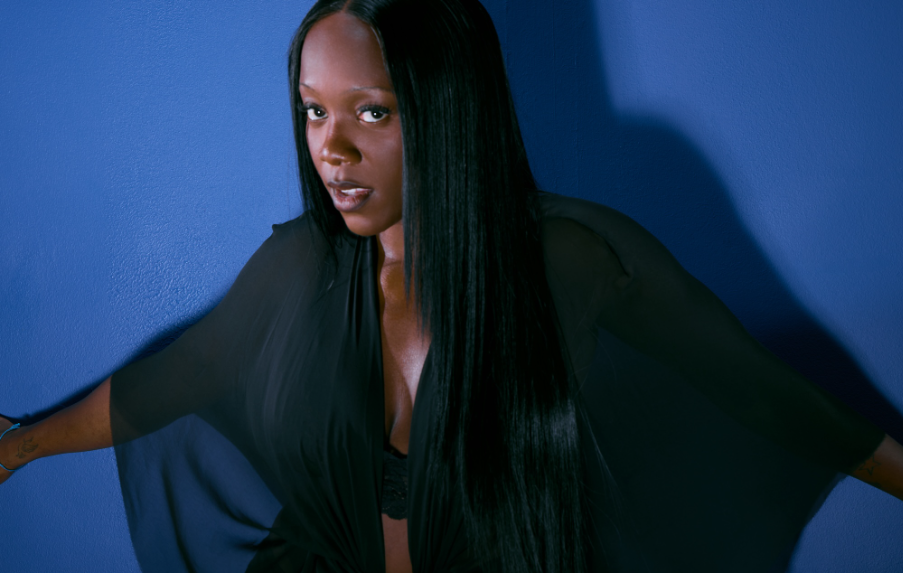
Rachel Chinouriri has always considered herself a party girl, or at least she used to. She loved going out and drinking, often brushing aside the anxiety that would catch up with her the following morning. “I’d go on loops of drinking from a stressed-out or traumatic place, being like, ‘This is really fun’, and then the next day being like, ‘Oh, I shouldn’t have done that’,” she tells NME with a smile. Sitting comfortably in her London flat, she leans back into a teal blue sofa, with plants and books filling the background as she runs her fingers through her long, sleek black hair. “I couldn’t seem to get myself out of that loop.”
When she started examining that behaviour more closely, Chinouriri realised she needed to look inward and confront some difficult questions. What was she trying to escape through drinking and partying? Was it the fear of losing friends or no longer being popular? “Am I scared of the person I am?” she remembers asking herself.
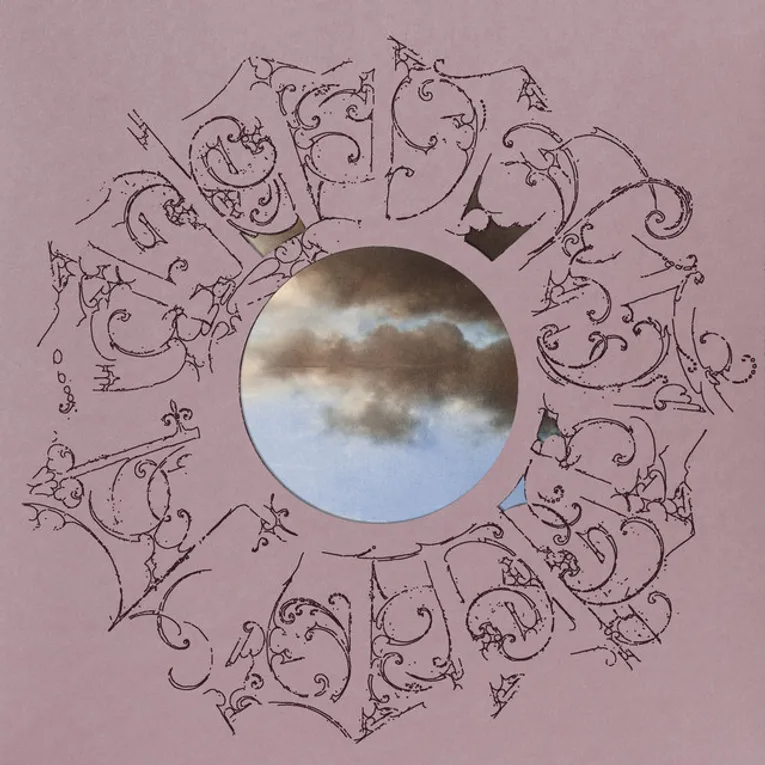
That period of reflection became the foundation for her second album, ‘I Think I Spoke Too Soon’. Across the record, she unpicks her party girl persona and explores what was really driving it, using the atmosphere of a lively night out as its backdrop. The first track she wrote for the album, ‘The Good Fight’, captures the beginning of that journey. “I’m with the friends I hate, and it’s me questioning why I drink and enjoy this submersion into something which at the time I thought was cool,” Chinouriri explains. “I’m like, ‘Actually, pull me out from this thing that I’ve sunk myself into.’” The process had a lasting effect. By the time she completed the album, she had been sober for more than a year.
While her debut album, ‘What a Devastating Turn of Events’, explored her relationships with the people and world around her, including family and romantic partners, its follow-up turns the focus inward. Across 12 tracks, she documents a change in her outlook and understanding of herself, moving closer to the person and artist she wants to be. Part of that process involved recognising who she wasn't. The difficult mornings after drinking and the exhaustion that made touring more challenging certainly encouraged her to become sober, but the success of her debut also played a significant role.
“There were so many [times where I was like] ‘My career and my life is so full and abundant, and it’s very busy’,” she reflects. “I started perceiving it as hard work. But then when I look at it as someone who had a paper route and multiple jobs growing up, I was like, ‘No, this is the life I asked for. It’s busy, and it’s doable, but it’s gonna be hard work if I’m then drinking alcohol excessively on top. This is not adding to the already chaotic, stressful time. And for me to be able to keep good relationships with my fans and my family and my boyfriend and with myself, maybe the one thing I need to sacrifice is drinking.”
On the lively synth-pop number ‘Broken Chair’, Chinouriri revisits a night of excess, pairing her delicate vocals with lyrics that capture the aftermath: “I love drinking till it’s over / You all love me till I’m sober / I’m walking home the morning after / Your friendly neighbourhood disaster”. The song was written in Los Angeles alongside fellow indie songwriter Lucy Dacus, whom Chinouriri has described as “one of my favourite people I know”. Their time together also had an influence on her beyond the music itself.
While struggling to find her place in Los Angeles, Dacus reminded her that she didn't need alcohol or a party lifestyle to feel comfortable with herself. Although the song deals with some difficult emotions, Chinouriri balances them with a playful, infectious chorus: “You look lonely, but not me / I’ve got plenty of friends until the last call”.
“This is the life I asked for. It’s busy, and it’s doable, but it’s gonna be hard work if I’m then drinking alcohol excessively on top”
Although she chose to become sober and “do therapy and the inner work”, Chinouriri doesn't regard that chapter as a negative period or a setback. Instead, she sees it as part of her personal journey. “I wouldn’t even say that time was negative because my album had come out and I was doing well for the first time in my career,” she says of her party girl era. “I was earning money for the first time. There were just so many positives happening. I was like, ‘This feels really hard, but I’m actually experiencing all the things that I prayed and asked for.’ I’ve had to learn not to punish myself for that because I actually wasn’t having a bad time. I don’t have to demonise that experience.”
That period brought two BRIT nominations, a sold-out headline UK tour and support slots for Sabrina Carpenter, Florence + The Machine and Wolf Alice. These were significant achievements for an artist who had to fight for recognition within a largely white indie scene, while being repeatedly categorised as R&B, soul and “urban” despite making music that didn't fit those labels. Perhaps that also explains why the sounds of Madonna, Kylie Minogue, Donna Summer and Prince had not previously featured as prominently in her music. Their songs sat alongside the noughties indie acts that shaped her debut on her playlists, but she is now embracing those influences without worrying about how her sound might be categorised.
While ‘I Think I Spoke Too Soon’ is full of nostalgic, euphoric sounds, with MGMT and LCD Soundsystem among its influences, the album remains deeply personal. Chinouriri's introspective songwriting follows her even onto the dancefloor, where the music might suggest she's having the time of her life. The record begins with the glitchy disco track ‘One Song Away From Crying’, which captures the experience of trying to hold back tears in a club. “I’ve never looked better, and I’ve never felt worse”, she sings over its polished, layered production, before adding: “I’m one dance away from leaving here without saying goodbye”.

On ‘Pretty Girls’, she celebrates womanhood over energetic drum machines, creating a track that feels like a slow-motion dancefloor scene with a touch of Two Door Cinema Club. Her vocals deliver the gentle invitation: “Can we kiss until the silver sparks turn to blue light?” The result is both relatable and made for dancing, capturing the tension between wanting to escape through a night of forced fun and eventually realising that you can no longer, or simply don't want to, avoid your own feelings.
“I wanted more upbeat [songs],” she says of the album's sound. “I’m a bit tired of the sad, slow songs. I love them, but singing them live … When I go out on stage, I wanna run around and jump and dance and shout.” Embracing a different musical direction did bring some uncertainty, however. “Knowing I was making quite disco-pop music, and seeing how much the fans loved the indie music, made me a little anxious because I [didn’t] know if [they were] guys are gonna rock with it,” she shares. “But currently, they are rocking with it very heavily, and it’s been very positive.”
When NME asks what she wants her dedicated fanbase, known as the Darlings, to take away from the album, Chinouriri responds with a huge smile: “Freedom.” She points to Madonna's ‘Hung Up’, one of her all-time favourite songs, as an example of the feeling she hopes to create. “If I hear that, I’m standing up, and I don’t care who’s watching me. I want songs that when people hear [them], they’re like, ‘Woo, let’s go and dance and be silly and close their eyes,’” she adds, acting out the feeling of getting completely lost in the music. “I want my fans to be able to feel that.” And how does she feel about the expectations surrounding the follow-up to her critically acclaimed debut? “I’m fucking excited,” she laughs. “Can I say that? I’m ready for it.”
Rachel Chinouriri’s ‘I Think I Spoke Too Soon’ is out now via Parlophone Records


.png)