FEATURES
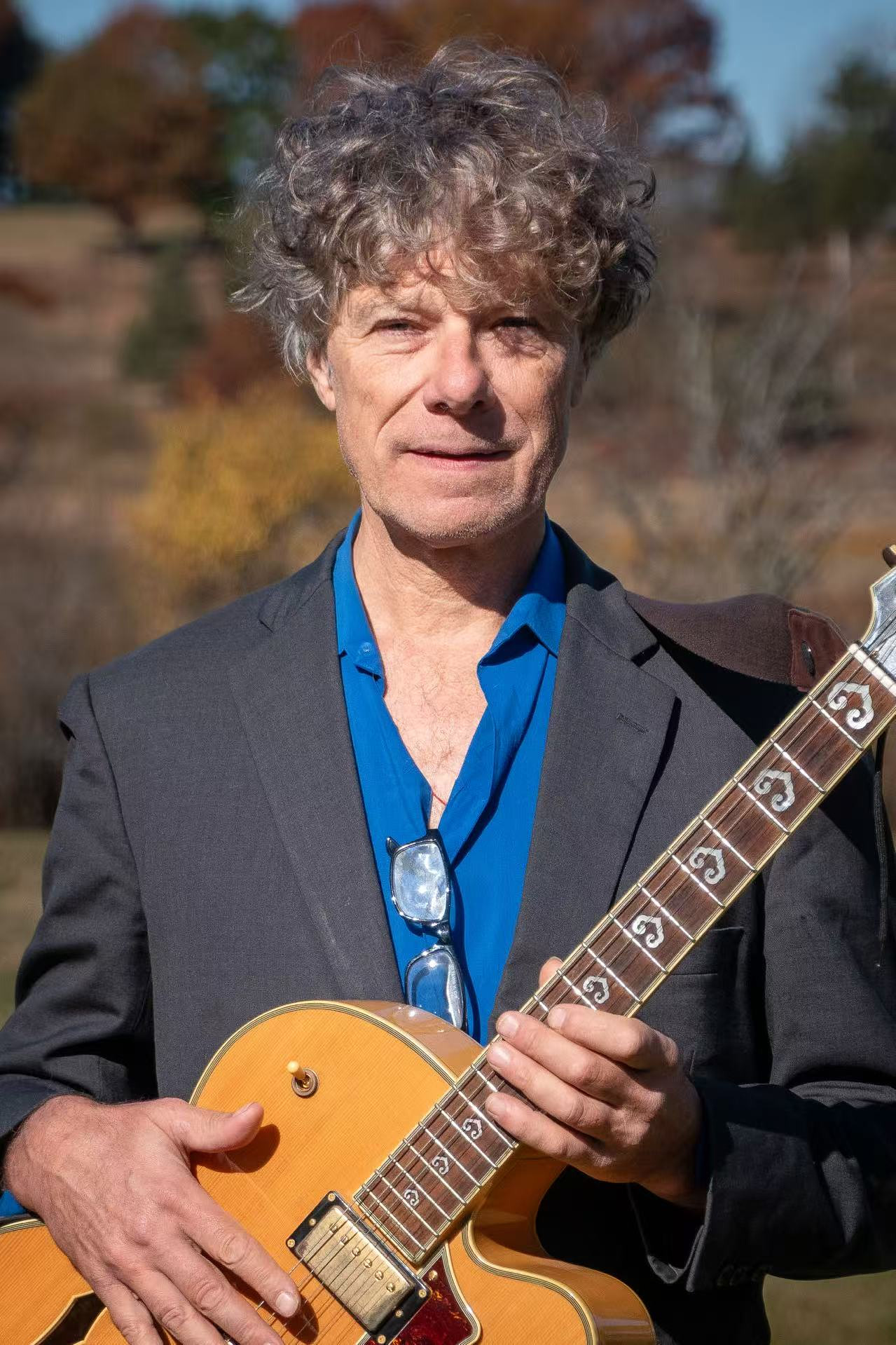
Ahead of his November 5 concert at Jimmy’s Jazz & Blues Club, the composer and guitarist talks about the freedom of independence, the lessons of a bad gig, and an album that lets listeners hear music being discovered.
Years ago, after a particularly bad gig, Chris Florio sat alone on an empty club stage. Everyone had gone home. He was feeling sorry for himself.
Then a thought interrupted the misery: He was going to keep making music for the rest of his life. This had been one night.
“I could use lessons from this experience to improve,” he recalls. “Every challenge since then has been just another opportunity to learn.”
Asked to identify a turning point across four decades of composing and recording, Florio reaches for that memory. He can’t nominate a single album or breakthrough that explains his career. Some of the experiences that mattered most, he says, felt like failures while he was living through them.
That perspective has served an unusually varied musical life. The Ipswich, Massachusetts, composer, producer, and guitarist has written more than 40 orchestral works and released 12 albums on Passion Records. His interests have taken him through multimedia collaboration, solo recording, and the unpredictable business of making something up with other musicians.
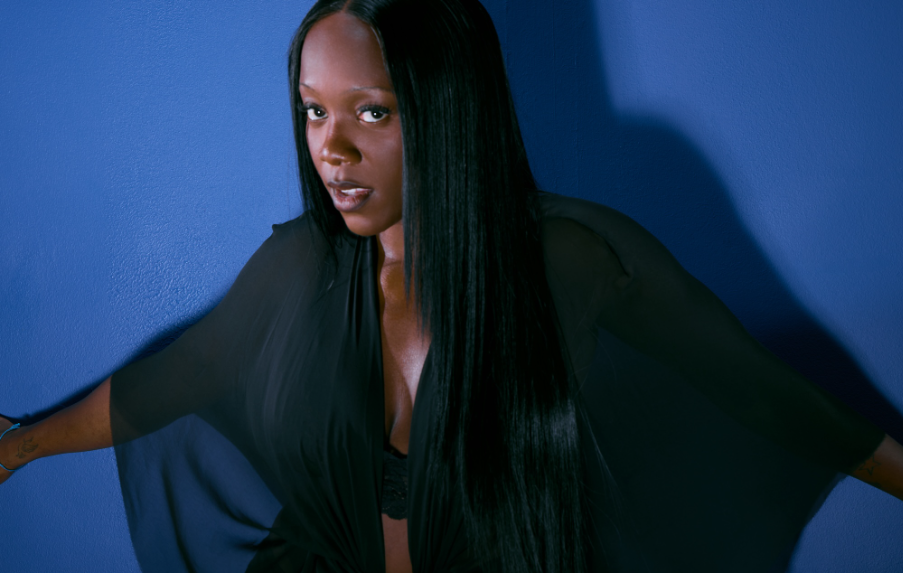
On Thursday, November 5, he brings that last pursuit to Jimmy’s Jazz & Blues Club in Portsmouth, New Hampshire, for a concert celebrating The Bridge and the Waterfall. Joining him are drummer Kenwood Dennard, bassist Wes Wirth, violinist Rob Flax, and vocalist Aliel.
“These particular musicians are some of my favorite players and people in the world,” Florio says.
The album gives listeners an unusually direct way into their relationship. Across two discs, it preserves both the improvisations that supplied the material and the finished songs that emerged from them. You can hear the musicians find an idea, then hear what they decided to do with it.
For a composer who often lets an orchestral piece develop in his head long before picking up a pencil, the sessions required a different kind of preparation.
“I went in with no plan, concept or theme,” he says. “I wanted the experience of those particular musicians on those particular days to be what created the music.”
The band improvised throughout the first day. They listened back, then spent the next two days refining what they had recorded into tunes they would have to learn to play.
“Seven Words” makes the process especially clear. It began as a half-hour jam, the first 20 minutes of which Florio describes as rambling and left off the album. Eventually, Dennard and Wirth settled into a rhythm built from four bars of 7/4 followed by one bar of 4/4. Dennard began reciting one of his poems. As the poem reached its climax, the other musicians responded with a simpler groove that, in Florio’s telling, had the force of a huge Seventies rock anthem.
The finished version moves faster, uses a different poem, and arrives at a different ending. The original remains available on the first disc, preserving the moment that set the whole thing in motion.
“None of us could have composed that piece,” Florio says. “It only came out of that moment in time.”
Learning to reproduce it for the stage presented its own challenge.
For Florio, those discoveries depend on the people in the room. He compares choosing collaborators to selecting ingredients whose flavors work together. With this ensemble, he also knows the musicians can follow an idea almost as quickly as someone introduces it.
He marvels at Dennard’s abilities on the drums, at Wirth and Flax’s command of their instruments and ease across styles. Aliel’s improvised melodies and lyrics, he says, can sound as though someone spent a long time composing them.
“The musicians in this band are not only my bandmates but also my teachers,” he says. “I learn and grow every time I play with them.”
On “Twinkle,” that exchange continued well beyond the initial performance. Flax and Aliel met for the first time on the opening day of the sessions. They connected quickly, then spent hours discussing the song’s meaning. The mood and lyrics of the original improvisation became the starting point for the final words they wrote together.
Florio says it is probably the track that changed most between the first jam and the finished performance.
His willingness to follow those changes has roots in the music he grew up hearing. He remembers an era shaped by the Beatles, when mixing styles and disregarding conventions seemed full of possibility. He never felt obliged to keep his influences apart.
“It never occurred to me not to use all of that influence when making my own music.”
At Berklee College of Music, he acquired tools he still uses daily: theory, technique, and especially ear training. But when the playing begins, he tries to set his knowledge aside long enough to respond to what is actually happening.
Knowing when to intervene and when to leave the musicians alone is often his primary job, he says. There is no formula. He trusts his instincts, his experience, and the players.
Maintaining the freedom to work that way has involved practical sacrifices. Shortly after college, Florio considered moving to Los Angeles to pursue film composition. He is grateful he chose a different path, one that allowed him to follow his interests and choose his collaborators.
“The freedom to make the music that I want to hear at any given time is something I cherish,” he says.
He is equally clear about the cost.
“I have no regrets about my choices, but they made it much harder to make a living.”
It took years to reach a point where making music no longer meant holding down another job as well.
For listeners wanting to explore that accumulated work, his recommendations depend on the day. Right now, he suggests the new album, the orchestral recording The Year of the Rabbit, and his solo album Butterfly/Gymsock. Together, he feels, they offer a reasonable sense of his range.
Thursday’s performance will concentrate on the new record, with the possibility of a few familiar covers. Florio calls Jimmy’s one of his favorite places to play anywhere. Within the songs, he intends to leave plenty of space.
“Playing with this band is like driving a precision sports car that reacts instantly to anything you do,” he says.
His advice to the audience is to pay attention when someone tries something new and to what the others do next. Those exchanges account for many of his favorite moments onstage.
“I have learned to leave room for those moments.”
After four decades, Florio still feels there is better music within his reach. Asked what remains to be explored, he takes the question seriously. If his life ended tomorrow, he says, he would not feel he had achieved the highest level of music he could make.
“So I guess the answer is that I would like to achieve that while I am here.”
Chris Florio performs with Kenwood Dennard, Wes Wirth, Rob Flax, and Aliel on Thursday, November 5, at 7:30 p.m. at Jimmy’s Jazz & Blues Club, 135 Congress Street, Portsmouth, NH.



.png)